Exclusive 1:1 Online Tuition!

If you’re searching for happy, successful 1:1 English tuition – no groups – please get in touch at leemottram@11plushappy.com, and visit http://www.11plushappy.com to learn more about me, my books and my lessons.

Let’s help your child reach their highest mark!

Regards, Lee Mottram,

BA English Literature, PGCE Primary Teacher, 17 years tuition experience

24-25 Successes include: Tiffin Girls & Boys, Sutton Grammar, Nonsuch Girls, Wallington Girls, Wallington Boys, Halifax Grammars, KGS, Freemans

Words of the week that your child can add to their writing (taken from a new upcoming book release)

Good morning, winter parents, tutors and children! I wanted to share a set of words from a story I’ve just finished writing, which will be included in an upcoming 11plushappy! book of fiction models. I thought, why wait till the book is out? They might help you now.

Each story model I’m putting in the book comes with a VVV – Very Varied Vocabulary – section, with ambitious vocabulary used in the story, along with meanings as they’re used in the story.

Vocabulary development is a vital tool for eleven plus writing – rare or advanced words, especially if they’ve been revised and the spelling is correct, will stand out from the crowd. Beyond the 11 plus, vocabulary is a superpower to help reading, writing and speaking. As Dr Seuss remarked, “The more that you read, the more things you will know. The more that you learn, the more places you’ll go.”

Remember that some of the words below can have more than one meaning. Indeed, they can also be different types of words. Venture, for example, is a verb for doing something or going somewhere that has risks, but it’s also a noun, the name of a particular venture. (Did you see I added an adjective before the noun to describe it?)

So use these words and meanings below as a springboard. The meanings I give are how I’ve used them in my story, and this can be a very quick hack to getting your child to use them quickly. Do have fun digging deep into all that a word can be alongside this.

Words you can use and what they mean in the story

Volume (noun): How loud something is. (I am talking about flooding river water, so it’s also a pun on another meaning of liquid volume or capacity, which means how much liquid is in the river.)

Pummelling (verb): Hitting something or someone many times, often with fists.

Affrighted (adjective): Very scared or frightened.

Instructed (verb): Told someone how to do something; gave directions.

Principal (adjective): Most important.

Thus (adverb): In this way; as a result, therefore we can say that. A fantastic sentence starter!

Venture (verb): To go somewhere or do something that might be risky.

Wretchedly (adverb): In a very unhappy, miserable way.

Reciprocated (verb): Responded to something in the same way (like returning a smile or kindness).

All-consuming (adjective): Taking up all your attention, energy, or feelings.

Seized (verb): Grabbed something quickly and firmly.

Impulse (noun): A sudden desire to do something without thinking.

Subdued (adjective): Quiet, gentle, or not as strong as usual.

Distressed (adjective): Very upset, worried, or in trouble.

Clacking (noun): A sharp, clicking sound, the sound of knocking stones together.

Inevitable (adjective): Something that is sure to happen and can’t be avoided.

Anguish (noun): Very strong pain or sadness.

Anticipate (verb): To expect something to happen; to look forward to something.

Flood-borne (adjective): Carried or brought by floodwaters.

Prodigious (adjective): Very large, amazing, or impressive.

Silhouette (noun): A dark outline or shape of something seen against a lighter background.

Mercifully (adverb): Thankfully; in a way that brings relief or kindness.

Presently (adverb): Soon; in a short time.

Occurred (verb): Happened; took place.

Clamber (verb): To climb awkwardly using hands and feet.

Makeshift (adjective): Temporary and not perfect, but good enough for now.

What wonderful words. I hope your child will be able to put some or all of these into their writing this week. If your child does add them in a story, I’d love to read it, so please do email it in at leemottram@11plushappy.com.

Right, back to writing the book! Have a wonderful winter day of learning. If you’re considering tuition as the season of winter fire glow, crisp dark nights, Christmas lights and mulled wine begins, do get in touch at leemottram@11plushappy.com. Giving the gift of education could be the most rewarding gift of all. If you’d like to treat a relative – a son, daughter, niece or nephew to a lesson or two, please do let me know, gift certificates are available. And do please visit www.11plushappy.com for paperback books to help your child’s learning.

Have a wonderful winter week of wonder and words.

Lee, London

Creative Writing Happy Tip: Subscribe to this blog!

Boo! A very short hello as you prepare for 11plus pr…oh, no , sorry, I mean Halloween today. If you’re serious about your child being the best prepared they can be for their creative writing exam, it’s wise to dip into different sources and formats of tests, as well as alternative advice and how-to’s. You gain the widest net of knowledge and perspective. That goes for resources too. There are books on my website that are dedicated to 11plus creative writing, that will give you a fresh, expert (I tutor 6 days a week) approach to transforming or enhancing your child’s writing.

There’s also this blog, where I post daily thoughts and strategies to improve your child’s writing, along with other aspects of the 11plus English exam. Think of it as the networking equivalent of an after school or before school parent teacher meeting, with insider advice you can put into practice as fast as a firework, and much faster than carving a pumpkin. So please, do subscribe, whether you’re a parent, grandparent, fellow tutor or teacher, or anyone helping children learn, and let me help you along the wonderful road that is the 11plus.

11plus Happy Halloween!

Lee, London.

Helping your child be better at planning stories

Hello Planny-parent! Time to get plannish! We know planning stories in exams has a number of advantages:

  1. It makes sure your child is answering the question with every sentence.
  2. The right plan (short) will save time and help your child write more within the exam time.
  3. A fully answered story will attract the most marks for the flow/cohesion part of marking.
  4. It stops your child worrying about finding the perfect story to write. There is no one correct story – think up one and go. You are marked for the writing, not just the idea.
  5. It helps your child manage time. They can attack paragraphs with a 5 minute rule for each paragraph far easier once they know what each paragraph will roughly be about.

How can you help your child plan better? By giving them times when they just practise imagining and writing plans, separate from actually writing the story. Focus on having fun with the planning. You can frame it like a fun factory or bakery, where their job is just to generate and churn out four or five plans for a prompt.

HAPPY TIP: Be generous with time first if needed. 15 minutes per plan, if you are talking it through together and playing with options. Then reduce the time a minute at a time, until we get to the optimal time of around 3 minutes a plan, for a full 40-60 min story.

Look at the gorgeous picture above (and below) of Heather Bridge, from a photograph I bought on holiday in a fantastic Art cafe, The Gallery, in Laurieston, Dumfries and Galloway.

Have your child invent three possible plans for a story inspired by or using this wonderful bridge. Planning something, then letting it go and starting again, is both a strange and wonderful experience. It’s interesting how your child may become attached to the story plan and not want to forget about it. Reassure them that no plan is wasted – they can choose the final plan (or choose more than one plan) to write the story with. This exercise is about trusting your own creative imagination, it’s about your child learning that their imagination can be trusted and also grows the more they practise this skill. It’s about admitting that planning is a skill that we can develop with deliberate practice.

To help, here are three short plans I came up with in a real lesson for the picture of the bridge. Here is the stunning Heather Bridge once more:

Plan 1: Adventure/friendship/funny

  • Identical twins who love each other live on opposite side of bridge, but meet often.
  • A friend is jealous of their closeness, and tries to make the other jealous of each other. She wants one of them to like her more.
  • The city announces pollution has filled the river and is to dangerous to cross, bridges will be closed and banned.
  • The friend is happy – she lives on one side and can have one brother as her best friend.
  • But the brothers come to the river and carry on their friendship, speaking and shouting to each other across the river.
  • The girl makes a translation machine that distorts their language and makes kindness sound like cruelty.
  • The boys are upset to hear each other insult each other. They fall out.
  • The twin who lives with the other friend discovers the machine, reverses it.
  • He also makes a catapult and decides to trick the girl to teach her a lesson. catapults himself to the other side.
  • Girl angry, insults them both, but the reversed translation machine makes her cruelty sound kind. Eventually, the girl apologises, and speaks kindly.
  • They figure out a way of all playing together by joining each other and taking turns on one side by using the catapult.

Plan 2: Fairytale/legend

  • Lonely girl visits the bridge daily – no heather – to sit and gather stones and throw them.
  • One day she arrives and heather has grown over it. No way through, or so she thinks. Sees another girl at the other end of the bridge. Tries to go over, but heather seems to stop her. The other girl tries the same, with same results.
  • They figure out if they meet in the middle, set off at the same time, they can cross onto the bridge. A magical friendship bridge.
  • A trap. Beneath is a lonely troll who lives off friendship and love – she has none of her own. Causes a flood and they fall into the water and are swept.
  • Friendship is too strong for the troll to swallow because both girls were lonely and really needed this friendship. The troll starts to feel pity and sorrow, rebuilds the bridge, but knows whatever she eats turns to stone, so puts their statues on the bridge as a reminder.
  • From this day, it is the most beautiful, famous bridge in the world, and people come from all over to celebrate their friendships. Sometimes, in the water, they hear the sound of the two friends laughing, still together. The troll did not die, but grows smaller and smaller from refusing to eat friends ever again. But, there is a legend that says if two friends go on the bridge who are not friends, the troll will grow larger and devour them. Lesson: be a real friend or the troll will eat you.

Plan 3: Portal Story

  • On one side of the bridge, all is well. A kind world, no one argues, no one wants for anything, cleanness and fresh air, etc. But the world is bordered by bridges that are forbidden to cross, all closed up and alarmed.
  • Szymon discovers Heather Bridge, curiosity grows, why can’t they cross? Finds he can cross it easily.
  • Another world on the other side – winter, smelly, shouts and sobs, things broken. Meets Rag, a child living on this side. They both are confused by each other. Tell of each other’s words. Discover that the kind perfect world only exists because bad energy is sent here to the outside. The Kind world creates this cruel world, there is no scope to change, no power.
  • They become friends and decide to form a pact to make a fairer world. Boy writes about Cruelland and tells everyone at home. He is put into jail for spreading lies. (he didn’t know there were prisons.)
  • Another person helps him escape, knows about the place too. He has invented a portal opener to open the bridges and allow Cruel Land people to escape and come back to be helped by Kindland. He and the boy open the bridges, has arranged for medical/social help for the incomers. Rag and Szymon first to cross bridge – a new opportunity to create a genuine Kindland for all.

Over to you. If your child uses plans for the above picture, please email me them at leemottram@1plushappy.com. I’d love to read them, and will post a few up here to share.

In the meantime, if you think your child would enjoy or benefit from creative writing lessons from a teacher who absolutely loves writing, please do reach out to me. With the 11plus exams nearly over for this year, I’ll be taking on four new online students. I’m currently teaching Y4, Y5, Y8, Y10 and Y11 students, preparing for both the 11plus and GCSE English Language exams, from Halifax to London to Kent. Please email leemottram@11plushappy.com.

Happy Writing!

Lee, London

Now With Pictures! (I Love Writing)

On Monday, I shared my love of both teaching and writing creative writing, and offered you a tip to help your child combine photographs from a day out into an exciting story. I now add to this three super happy, super important gifts: the photographs!

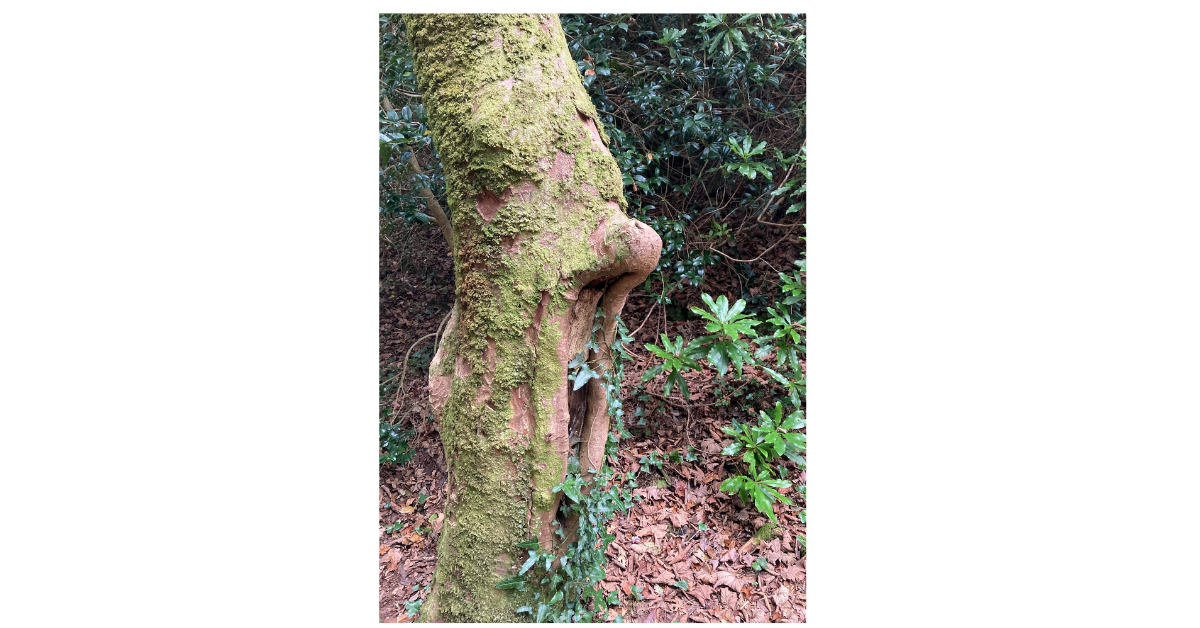
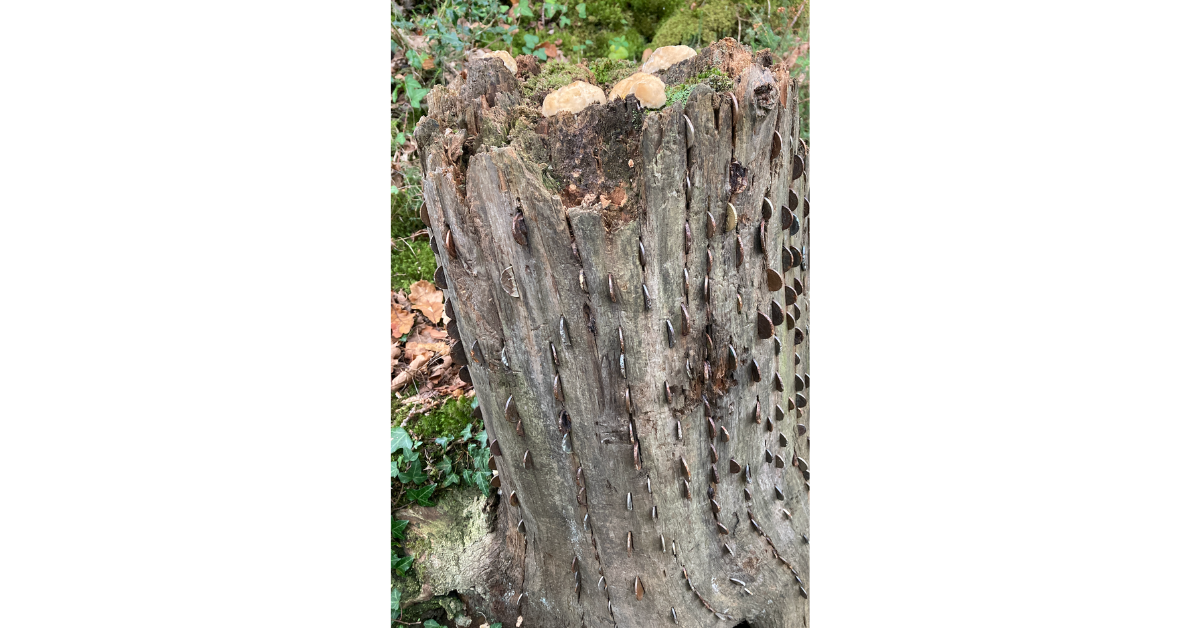
As I near completion of the 11plus Creative Writing Fiction Models guide, book 3 in the Creative Writing Series, I’ve just finished a story about cakes, and am, this morning, halfway through my last story, a story about two very different trees and a villain called Lord Hardsilver, inspired by a visit to the incredible Port Meirion, a creative writing paradise!

How did I come up with the idea for this latest story? I took countless photos on the day, chose three, and then stared at these three pictures below and imagined a way to connect them.

Aren’t they spectacular? All from one place!

Your child can do the same with photos chosen from a day out anywhere. After choosing three pictures, encourage your child to plan a possible story that links the photos, with between 3-6 steps. HAPPY TIP: Your young writer could even repeat this and come up with several plans for different stories from the same photos, which is a fantastic planning exercise to build planning muscle! To help you see what I mean, here’s one of the rough plans I came up with for the fantastic photos above:

  1. Lord Hardsilver has persuaded/bullied the old secretive lady to sell him land on a remote peninsula.
  2. Ancient forest, a giver to nature – a spirit lives to tend it.
  3. He wants the rare wood, and to build a village on it to trap people to work for him.
  4. As he works, the tree screams. The men are frightened.
  5. He ignores them, sacks any who rebel and brings in more desperate people.
  6. The spirit through the tree threatens he will be made part of the land, but he laughs and starts to chop at the tree.
  7. All the trees scream, deafening and hurting, vines begin grabbing, soil swallows workers. Some run for the boat, but it has fused with the island – no escape.
  8. Lord Hardsilver is turned into a tree stump. Animals come and slide coins into him so he can feel the pain of money that he caused nature.

Feel free to use this as a plan for your child’s writing. In any case, the story your child writes for their photos will likely have a structure and connection, since the pictures you took were from the same area, as you can see in the pictures above.

Why does this power of three work? As we spoke about on Monday: “the act of linking the pictures possibly takes advantage of the fact we humans are very good at finding patterns or associations between given objects – even when there is no real link. For example, if I ask you to imagine a story or create a link that could connect a tortoise and a paperclip, your brain will probably do it (perhaps the tortoise is a jewel thief who uses the paperclip to pick locks from a Lego house, keeping the treasure under her shell), whereas, if I had asked you to think of associations that connect only to a tortoise, it’s unlikely your brain would have thought about a paperclip!”

Okay, today is ‘finish story’ day. I really hope you enjoyed the photographs. Port Meirion was a life-changing creative writing experience for me. I came back with a whole book of story ideas.

In the meantime, if you think your child would enjoy or benefit from creative writing lessons from a teacher who absolutely loves writing, please do reach out to me. With the 11plus exams nearly over for this year, I’ll be taking on five online students. I’m currently teaching Y4, Y5, Y8, Y10 and Y11 students, preparing for both the 11plus and GCSE English Language exams, from Halifax to London to Kent. Please email leemottram@11plushappy.com.

Happy Writing!

Lee, London.

I Love Creative Writing!

Hello, Halloween parent. One of the reasons I love teaching creative writing so much is that I enjoy writing so much myself. I thought I’d share exciting news that the fiction models guide is close to finishing; I’ve just finished a story about cakes, and am now starting a story about a screaming tree and a villain called Lord Hardsilver, inspired by a visit to the incredible Port Meirion, which is a creative writing paradise! The guide will contain models and full lessons on every feature, so your child can learn to use these features in their own exam-winning writing.

Here’s a tip for the day to try with your child. This is how I came up with the idea for the current story. Visiting anywhere, take pictures of anything you can, including the same object from different angles. Back at home, simply choose three pictures and ask your child to create a story that links all three pictures, in any order. The story will likely already have a structure, since the pictures you took were from the same area. For example, a lake, autumn leaves and a stone that resembles a face.

Rather than stick to one picture, the act of linking the pictures takes advantage of the fact we humans are very good at finding patterns or associations between given objects – even when there is no real link. For example, if I ask you to imagine a story or create a link that could connect a tortoise and a paperclip, your brain will probably do it (perhaps the tortoise is a jewel thief who uses the paperclip to pick locks from a Lego house, keeping the treasure under her shell), whereas, if I had asked you to think of associations that connect only to a tortoise, it’s unlikely your brain would have thought about a paperclip!

If you think your child would enjoy or benefit from creative writing lessons from a teacher who absolutely loves writing, why not reach out now? With the 11plus exams nearly over for this year, I’ll be taking on another handful of online students. I’m currently teaching Y4, Y5, Y8, Y10 and Y11 students, preparing for both the 11plus and GCSE English Language exams.

Simply email leemottram@11plushappy.com.

Right, time to pick up my own pen and bring Lord Hardsilver to life. Happy Writing!

Lee, London.

VVV: Very Varied Vocabulary Episode 2: 7 Tips to Help Your Child Grow and Embed a Gargantuan 11Plus Vocabulary! (Preview from the coming podcast season)

Hello! We’re back with Podcast Preview 2, in a season dedicated to the 11plus superhero skill of vocabulary. In our last podcast, we learned why it was vital your child develops a sparkling repertoire of words as they approach the 11plus. Today, I’d like to share 7 ways to kickstart and augment your child’s 11plus vocabulary in your learning sessions and in life around the house. Maybe you’re doing them already – if you are, please let me know how they work for you. Here goes…

  1. Down-Up & Write (with a drop of the unusual added in).

When reading new words in stories, plan times – perhaps chapter ends, or every few pages – for you or your child to write the word down and look up its meaning. Then take a handful of words and write them into a small paragraph, or a few sentences in ANY kind of text: a silly poem, a shopping list, a letter or email to a relative, a name tag on a plant, a story, a description whatever you can both think of. Sometimes, unusual texts will stick in the mind. Imagine you’ve written adjectives on separate plant pots in your garden or kitchen; they’re there all the time, so your child will be reminded of them if they’re playing near them or watering them. You can gamify this quite easily. “Mahesh, go and water the omniscient onions.” “Ananya, could you water the Vociferous Violets, please?”

2. Make time to read aloud to each other.

It’s a super way to really identify words that are tricky or new, since if they’re reading alone, you won’t hear your child pause or skip. The danger is, if there’s too many skips without taking the time to understand or share a word and its meaning, it can become frustrating, which can lead to avoiding reading (like the Wuthering Heights student I mentioned in the last post).

3. The Word List Board Game.

Look up word lists. You can google ‘vocabulary KS3/KS2’ or ‘ks2 synonyms for said, lists of verbs, etc. I love two resources out there: Banish Boring Words (it’s American, so just watch for ‘z’s when the UK uses ‘s’s, and the U.S. ‘or’ when the UK uses our (we write behaviour, they write behavior) and Twinkl have a fantastic ‘500 11plus words’ pdf if you are a member. (No affiliate, I just use them a lot in lessons, and I bought both the book and the subscription.) However, there are dozens of free lists out there. With a list, you have ready-made boardgame. Grab a dice (you need a dice as part of your 11plus journey – they turn everything into a game!) and roll through the words. You could go backwards, forwards, have a race to the centre of the list, with you starting at different ends, add any rule you can invent. With the word you land on, speak, check the meaning, and write it into a sentence. Even better, why not say all the words on your way to the word you land on?

Actually, on the issue of writing sentences, I’m coming to the conclusion that as we don’t ask children to write sentences in an exam, it might be better to choose 3-5 words at a time, which your child then puts into a paragraph. The extra advantage of this is it will strengthen the understanding of a word, since your child has to work out how the words can fit together.

4. A super solid strategy is to balance modern lists with lists of words from Victorian literature.

I’m in the process of developing Victorian lists, but if you google ‘victorian vocabulary list 11plus’ or ‘victorian vocabulary from novels’,you’ll be amazed at what you find. I’ll post when my lists are compiled.

5. Start, Middle and End.

To help your child write their paragraph, they could choose three words from a list and agree to use one word in the first sentence, one word in the middle and one in the last sentence. They can try this in a whole story, with one word the last word of the story, you have a fun target to aim for.

6. Choose 5-10 words of the week and make them the whole family’s target.

Points are given each time someone catches someone using the word in speech or in writing. Don’t be too serious with this, have some fun. “My need to burp is abating (lessening),” is absolutely fine! Go with your own family limits.

7. Synonym Bagels for see-through words.

This last one’s a teaser, as next week, we’ll look at the sinister, light-fingered, larcenous, vocabulary-thieving evil of see-through words, for which synonym bagels will come to your child’s rescue.

 For now, go have fun, go make some progress, find some new words together, do subscribe, and please pop by my little website, www.11plushappy.com, for books and posts to help you and your child achieve 11 plus success. You can also email me at leemottram@11plushappy.com . Thanks for being adventurous and brave and crazy and loving enough to walk this 11plus path with your child. I hope this first episode has whetted your appetite and got you salivating for some syllables. Sieze the moments, and enjoy the time you have learning together. Start learning, stay learning, stay 11plus happy!

Lee.

VVV: Very Varied Vocabulary: A Superhero of the 11 Plus. (Preview from the coming podcast season)

Hello! Good to speak to you again. Did you know you’ll soon be able to enjoy 11plushappy as a podcast? (Season 1 is curiously called season 2 – you’ll have to listen to find out why)

Season 2 will be dedicated to one of the major superheroes of happy 11plus learning – vocabulary. Over 10 episodes, you’ll understand why it’s such a life-changing, exam-winning champion, capable of transforming your child’s writing, reading, comprehension and SPAG-skills, both in the months of preparation and during your little genius’s exam itself. Vocabulary is a game changer, which will help your child make rapid gains in 11plus prep. In this blog, I’m giving you advance content script from the podcast, in order to get you started asap. Let’s ring the bell and dive into the lesson.

Episode 1 – Let’s talk words.

Why is vocabulary so important to your child’s 11plus chances? What’s the big/vast/abyss-like/substantial/momentous/consequential/mammoth/far-reaching deal?

Here are 4 reasons why teaching and practising challenging and exciting new words must be a priority in the learning you do with your child. You’ll see that they all mingle and affect each other, so the list of four is just to help us organise our thinking.

  1. It’s already a national priority

A first point to note is that nationally, vocabulary has already been declared a priority by the UK education sector.

For example, post Covid, The Department for Education, the national education body for state schools, guides reception teachers to ‘assess and address gaps in language’ and get busy with ‘extending’ vocabulary.’ For KS1 and 2, the talk is of ‘increasing vocabulary’ and ‘developing’ vocabulary. This was prompted by widespread worry from teachers and parents that post-lockdown children had less vocabulary skills than pre-lockdown, and that deliberate intervention ought to be a must-have.

Away from lockdown, other studies have also explored the important issue of a language gap between different socio-economic groups. One of these, by a team called Hart and Risley, suggested an almost unbelievable gap of 30 million words between the richest and poorest slices of society by the age of about 4, in terms of the words that children have been exposed to or use. The study has holes in it, so here’s a helpful link to a catch-up commentary on it from 2015, which I find sane.

What I love in the study is the beautiful idea of mental nutrition, key examples of which are vocabulary and parent-child talk.

What matters for us here is that if vocabulary is a priority of those in the know, then do you think it might be important for you and your child? Hopefully, your head’s nodding.

2. English as an Additional or Second Language?

Another reason you may wish to focus on teaching new words and exposing your child to a rich varied diet of words is if English is an additional or second language for your child. From a purely time factor, if you’re speaking a non-English language as a home language, your child will be less exposed to English words, and less exposed to sources of English words. Where I am in South London, for example, I teach several ridiculously talented Polish and Sri Lankan children, and we find it enormously helpful to include the learning and writing of new, ambitious vocabulary into most lessons. This boosts confidence, comprehension and eloquence in both speaking and creative writing. Your child can only write with the words they know, hence a continuous stream of new words into your child’s life is going to explode progress in English and supply wonderful, mental nutrition.

3. It makes your child a better writer

Your child will write more interesting words and produce better writing. Better writing leads to higher scores in tests. It just does. True, away from tests, published, highly respected authors often opt for simple language with complete success. For instance, some writers nearly always use ‘said’ for ‘she said’, and steer away from synonyms -whispered, breathed, bellowed, etc. But… these authors are not sitting for 11plus exams, where marks are given – I’ll repeat that – they ARE given – for ambitious, extensive vocabulary. Especially if it’s spelled right, which is another reason to teach it deliberately, to give your child time to learn how to write ambitious words without error.

4. It makes your child a better reader.

Reading improves your vocabulary and vocabulary improves your reading. I recently taught a KS3 English genius, who has an ambition to read the classics. She tragically confessed that she’d stopped reading Wuthering Heights at the first page because there had been too many words she hadn’t understood. Needless to say, we’re addressing that in lessons and she has picked up the book again!

Ultimately, it comes down to EXPOSURE. On radio, tv, and in unplanned conversation, we’re not going to come across the wide vocabulary we need to smash an 11plus entrance exam. We’re just not. Your child can’t learn a word if they don’t come across it, so you can really help by putting handfuls of high-quality words in front of them. Even a few new words each session will lead to huge gains across the months of prep, helping your child understand and recognise the wide range of words that tests can use, such as finding synonyms and antonyms, spelling uncommon words, recognising what part of speech (what kind of word) a word is, missing letters, and so on.

Okay, vocabulary. Over to you. Are you convinced? Persuaded? Cajoled? Influenced? Coaxed? Enticed? In our next blog, released on Tuesday, we’ll look at 7 easy exercises to help your child learn and use new words Maybe you’re doing some or all of them already…

The podcast, 11plushappy English, is due to launch early September, giving you another convenient way to enjoy tips and support as you take your child towards 11plus success.

Have a beautiful week of learning.

Lee, London

Sneak Peak Week Day 5: Step Inside My Non-Fiction Creative Writing Book (Happy Half-term Catch Up)

Hello! Day 5! All this half-term holiday week, I’ve been re-sharing a 5-day close-up look through an eleven-plus exam-winning model of a persuasive letter, taken from this lovely, sensational book of non-fiction creative writing models.

The aim is to give you immediate steps to improve your child’s writing this week! This is our final day of the catch-up, so let’s explore one way (there are many others!) to end the letter. Below, you can find links to all our lessons from the week, so if you haven’t read these yet, you may wish to start at the start and read the whole letter and lesson in chronological order.

On Monday, we looked at the opening of the letter and the question prompt. On Tuesday, we continued with the first three paragraphs of the letter. On Wednesday, we focused on more-of-less paragraphs. Thursday’s sneak peak moved from the middle of the letter towards the end, showing you effective ways to play with structure. Today, Friday, we close with the close, and explore the essential need to finish the letter with a flourish. The post is laid out in the following way:

  • The final paragraphs and saying goodbye.
  • Extracts from the What, How, Why lesson that guide you and your child through the writing features used in the model. You can SHOW your child or student what successful writing looks like. (Each model in the book is always partnered with pages and pages of this in-depth learning, so you can squeeze maximum learning value from each model.)
  • To help with the lesson, I split the original letter into pieces. These sentences from the original letter are in bold to help you see what writing the lesson is referring to.

Here’s day 5’s final extract. It’s short, but essential in learning how to finish strong. Parting is such sweet sorrow…

Extract continued (Day 5: The Goodbye)

Thank you for reading my letter. I know you will make the right decision.

Consider. Think. Keep Goodview.

Yours Faithfully,

Laney Liketree.

WHAT, HOW AND WHY: The Lesson

Thank you for reading my letter. I know you will make the right decision.

  • Please be polite in your formal letters. Saying thank you is itself persuasive. People like to be appreciated.
  • By telling them you are sure they will ‘make the right decision’, you don’t give them a choice to make the wrong one! You almost suggest they have already decided to do what you want. You hypnotise them into agreeing!

Consider. Think. Keep Goodview.

  • Power of 3: To finish with persuasive techniques is to tell your marker you really know your stuff, and signals you have answered the question all the way through.
  • Three short sentences, some with only one word, give variety after the long dramatic conversation. I do this to slow down the letter and focus the reader on the steps I want them to take. What do you want to happen after the letter is finished and put down?
  • The short sentences contain bossy, command verbs that invite the reader to make the changes you wish to see. It’s helpful to leave your reader with specific actions to take. This is sometimes known as a ‘call to action’. Otherwise, even if they agree with you, they may not know what to do. By giving them the action, you make it easier for them to implement, as they have to think less. How kind of you!

Yours Faithfully,

  • Finish with this phrase if you don’t know the name of the person you’re writing to. Remember that we started with an unnamed ‘Dear Sir/Madam’.
  • If you do know an actual name (for example, if you are writing to your head teacher), write ‘Yours Sincerely’ at the end instead.

Laney Liketree

  • Of course, you’ll write your own name here.  I just chose to have some final fun with a pun. You could put a pun that links to the theme of the question in brackets next to your real name and let them know it’s your nickname. E.g. Laney (Liketree) Mottram, Lee (Leaf-Lover) Mottram. This way, you are giving your reader a treat and playing with language to the very last moment. True dazzle!

Amazing. You’ve now had a full sneak peak inside a full persuasive letter. Your child already has a model to build their own with. Go back and read the week’s blogs and put a plan together for their own writing. For many more models, lessons and dedicated vocabulary boosters, you’ll absolutely love the gloriously helpful book from which this extract is taken. You can dive in here

or by clicking on the happy pic!

An important reminder is that your child becomes a better writer through writing deliberately – selecting a few techniques and practising adding these into their writing. This stops them repeating the same ideas and staying at the same level of writing, and will ensure they make constant progress.

A second reminder – do lots of practice writing! 1-2 full essays a week is a great target that will allow them to build these skills over time.

A third reminder: praise their writing, love their writing. Point out improvements with enthusiasm, note any gaps quietly, and add these into their next practice session.

Please let me know what you enjoyed and learned from our time together in this Sneak Peak Week.

Get in touch at leemottram@11plushappy.com

Have a beautiful day of learning.

Lee, London