blog & tips

I Love Creative Writing!

Hello, Halloween parent. One of the reasons I love teaching creative writing so much is that I enjoy writing so much myself. I thought I’d share exciting news that the fiction models guide is close to finishing; I’ve just finished a story about cakes, and am now starting a story about a screaming tree and a villain called Lord Hardsilver, inspired by a visit to the incredible Port Meirion, which is a creative writing paradise! The guide will contain models and full lessons on every feature, so your child can learn to use these features in their own exam-winning writing.

Here’s a tip for the day to try with your child. This is how I came up with the idea for the current story. Visiting anywhere, take pictures of anything you can, including the same object from different angles. Back at home, simply choose three pictures and ask your child to create a story that links all three pictures, in any order. The story will likely already have a structure, since the pictures you took were from the same area. For example, a lake, autumn leaves and a stone that resembles a face.

Rather than stick to one picture, the act of linking the pictures takes advantage of the fact we humans are very good at finding patterns or associations between given objects – even when there is no real link. For example, if I ask you to imagine a story or create a link that could connect a tortoise and a paperclip, your brain will probably do it (perhaps the tortoise is a jewel thief who uses the paperclip to pick locks from a Lego house, keeping the treasure under her shell), whereas, if I had asked you to think of associations that connect only to a tortoise, it’s unlikely your brain would have thought about a paperclip!

If you think your child would enjoy or benefit from creative writing lessons from a teacher who absolutely loves writing, why not reach out now? With the 11plus exams nearly over for this year, I’ll be taking on another handful of online students. I’m currently teaching Y4, Y5, Y8, Y10 and Y11 students, preparing for both the 11plus and GCSE English Language exams.

Simply email leemottram@11plushappy.com.

Right, time to pick up my own pen and bring Lord Hardsilver to life. Happy Writing!

Lee, London.

VVV: Very Varied Vocabulary Episode 2: 7 Tips to Help Your Child Grow and Embed a Gargantuan 11Plus Vocabulary! (Preview from the coming podcast season)

Hello! We’re back with Podcast Preview 2, in a season dedicated to the 11plus superhero skill of vocabulary. In our last podcast, we learned why it was vital your child develops a sparkling repertoire of words as they approach the 11plus. Today, I’d like to share 7 ways to kickstart and augment your child’s 11plus vocabulary in your learning sessions and in life around the house. Maybe you’re doing them already – if you are, please let me know how they work for you. Here goes…

  1. Down-Up & Write (with a drop of the unusual added in).

When reading new words in stories, plan times – perhaps chapter ends, or every few pages – for you or your child to write the word down and look up its meaning. Then take a handful of words and write them into a small paragraph, or a few sentences in ANY kind of text: a silly poem, a shopping list, a letter or email to a relative, a name tag on a plant, a story, a description whatever you can both think of. Sometimes, unusual texts will stick in the mind. Imagine you’ve written adjectives on separate plant pots in your garden or kitchen; they’re there all the time, so your child will be reminded of them if they’re playing near them or watering them. You can gamify this quite easily. “Mahesh, go and water the omniscient onions.” “Ananya, could you water the Vociferous Violets, please?”

2. Make time to read aloud to each other.

It’s a super way to really identify words that are tricky or new, since if they’re reading alone, you won’t hear your child pause or skip. The danger is, if there’s too many skips without taking the time to understand or share a word and its meaning, it can become frustrating, which can lead to avoiding reading (like the Wuthering Heights student I mentioned in the last post).

3. The Word List Board Game.

Look up word lists. You can google ‘vocabulary KS3/KS2’ or ‘ks2 synonyms for said, lists of verbs, etc. I love two resources out there: Banish Boring Words (it’s American, so just watch for ‘z’s when the UK uses ‘s’s, and the U.S. ‘or’ when the UK uses our (we write behaviour, they write behavior) and Twinkl have a fantastic ‘500 11plus words’ pdf if you are a member. (No affiliate, I just use them a lot in lessons, and I bought both the book and the subscription.) However, there are dozens of free lists out there. With a list, you have ready-made boardgame. Grab a dice (you need a dice as part of your 11plus journey – they turn everything into a game!) and roll through the words. You could go backwards, forwards, have a race to the centre of the list, with you starting at different ends, add any rule you can invent. With the word you land on, speak, check the meaning, and write it into a sentence. Even better, why not say all the words on your way to the word you land on?

Actually, on the issue of writing sentences, I’m coming to the conclusion that as we don’t ask children to write sentences in an exam, it might be better to choose 3-5 words at a time, which your child then puts into a paragraph. The extra advantage of this is it will strengthen the understanding of a word, since your child has to work out how the words can fit together.

4. A super solid strategy is to balance modern lists with lists of words from Victorian literature.

I’m in the process of developing Victorian lists, but if you google ‘victorian vocabulary list 11plus’ or ‘victorian vocabulary from novels’,you’ll be amazed at what you find. I’ll post when my lists are compiled.

5. Start, Middle and End.

To help your child write their paragraph, they could choose three words from a list and agree to use one word in the first sentence, one word in the middle and one in the last sentence. They can try this in a whole story, with one word the last word of the story, you have a fun target to aim for.

6. Choose 5-10 words of the week and make them the whole family’s target.

Points are given each time someone catches someone using the word in speech or in writing. Don’t be too serious with this, have some fun. “My need to burp is abating (lessening),” is absolutely fine! Go with your own family limits.

7. Synonym Bagels for see-through words.

This last one’s a teaser, as next week, we’ll look at the sinister, light-fingered, larcenous, vocabulary-thieving evil of see-through words, for which synonym bagels will come to your child’s rescue.

 For now, go have fun, go make some progress, find some new words together, do subscribe, and please pop by my little website, www.11plushappy.com, for books and posts to help you and your child achieve 11 plus success. You can also email me at leemottram@11plushappy.com . Thanks for being adventurous and brave and crazy and loving enough to walk this 11plus path with your child. I hope this first episode has whetted your appetite and got you salivating for some syllables. Sieze the moments, and enjoy the time you have learning together. Start learning, stay learning, stay 11plus happy!

Lee.

VVV: Very Varied Vocabulary: A Superhero of the 11 Plus. (Preview from the coming podcast season)

Hello! Good to speak to you again. Did you know you’ll soon be able to enjoy 11plushappy as a podcast? (Season 1 is curiously called season 2 – you’ll have to listen to find out why)

Season 2 will be dedicated to one of the major superheroes of happy 11plus learning – vocabulary. Over 10 episodes, you’ll understand why it’s such a life-changing, exam-winning champion, capable of transforming your child’s writing, reading, comprehension and SPAG-skills, both in the months of preparation and during your little genius’s exam itself. Vocabulary is a game changer, which will help your child make rapid gains in 11plus prep. In this blog, I’m giving you advance content script from the podcast, in order to get you started asap. Let’s ring the bell and dive into the lesson.

Episode 1 – Let’s talk words.

Why is vocabulary so important to your child’s 11plus chances? What’s the big/vast/abyss-like/substantial/momentous/consequential/mammoth/far-reaching deal?

Here are 4 reasons why teaching and practising challenging and exciting new words must be a priority in the learning you do with your child. You’ll see that they all mingle and affect each other, so the list of four is just to help us organise our thinking.

  1. It’s already a national priority

A first point to note is that nationally, vocabulary has already been declared a priority by the UK education sector.

For example, post Covid, The Department for Education, the national education body for state schools, guides reception teachers to ‘assess and address gaps in language’ and get busy with ‘extending’ vocabulary.’ For KS1 and 2, the talk is of ‘increasing vocabulary’ and ‘developing’ vocabulary. This was prompted by widespread worry from teachers and parents that post-lockdown children had less vocabulary skills than pre-lockdown, and that deliberate intervention ought to be a must-have.

Away from lockdown, other studies have also explored the important issue of a language gap between different socio-economic groups. One of these, by a team called Hart and Risley, suggested an almost unbelievable gap of 30 million words between the richest and poorest slices of society by the age of about 4, in terms of the words that children have been exposed to or use. The study has holes in it, so here’s a helpful link to a catch-up commentary on it from 2015, which I find sane.

What I love in the study is the beautiful idea of mental nutrition, key examples of which are vocabulary and parent-child talk.

What matters for us here is that if vocabulary is a priority of those in the know, then do you think it might be important for you and your child? Hopefully, your head’s nodding.

2. English as an Additional or Second Language?

Another reason you may wish to focus on teaching new words and exposing your child to a rich varied diet of words is if English is an additional or second language for your child. From a purely time factor, if you’re speaking a non-English language as a home language, your child will be less exposed to English words, and less exposed to sources of English words. Where I am in South London, for example, I teach several ridiculously talented Polish and Sri Lankan children, and we find it enormously helpful to include the learning and writing of new, ambitious vocabulary into most lessons. This boosts confidence, comprehension and eloquence in both speaking and creative writing. Your child can only write with the words they know, hence a continuous stream of new words into your child’s life is going to explode progress in English and supply wonderful, mental nutrition.

3. It makes your child a better writer

Your child will write more interesting words and produce better writing. Better writing leads to higher scores in tests. It just does. True, away from tests, published, highly respected authors often opt for simple language with complete success. For instance, some writers nearly always use ‘said’ for ‘she said’, and steer away from synonyms -whispered, breathed, bellowed, etc. But… these authors are not sitting for 11plus exams, where marks are given – I’ll repeat that – they ARE given – for ambitious, extensive vocabulary. Especially if it’s spelled right, which is another reason to teach it deliberately, to give your child time to learn how to write ambitious words without error.

4. It makes your child a better reader.

Reading improves your vocabulary and vocabulary improves your reading. I recently taught a KS3 English genius, who has an ambition to read the classics. She tragically confessed that she’d stopped reading Wuthering Heights at the first page because there had been too many words she hadn’t understood. Needless to say, we’re addressing that in lessons and she has picked up the book again!

Ultimately, it comes down to EXPOSURE. On radio, tv, and in unplanned conversation, we’re not going to come across the wide vocabulary we need to smash an 11plus entrance exam. We’re just not. Your child can’t learn a word if they don’t come across it, so you can really help by putting handfuls of high-quality words in front of them. Even a few new words each session will lead to huge gains across the months of prep, helping your child understand and recognise the wide range of words that tests can use, such as finding synonyms and antonyms, spelling uncommon words, recognising what part of speech (what kind of word) a word is, missing letters, and so on.

Okay, vocabulary. Over to you. Are you convinced? Persuaded? Cajoled? Influenced? Coaxed? Enticed? In our next blog, released on Tuesday, we’ll look at 7 easy exercises to help your child learn and use new words Maybe you’re doing some or all of them already…

The podcast, 11plushappy English, is due to launch early September, giving you another convenient way to enjoy tips and support as you take your child towards 11plus success.

Have a beautiful week of learning.

Lee, London

Sneak Peak Week Day 5: Step Inside My Non-Fiction Creative Writing Book (Happy Half-term Catch Up)

Hello! Day 5! All this half-term holiday week, I’ve been re-sharing a 5-day close-up look through an eleven-plus exam-winning model of a persuasive letter, taken from this lovely, sensational book of non-fiction creative writing models.

The aim is to give you immediate steps to improve your child’s writing this week! This is our final day of the catch-up, so let’s explore one way (there are many others!) to end the letter. Below, you can find links to all our lessons from the week, so if you haven’t read these yet, you may wish to start at the start and read the whole letter and lesson in chronological order.

On Monday, we looked at the opening of the letter and the question prompt. On Tuesday, we continued with the first three paragraphs of the letter. On Wednesday, we focused on more-of-less paragraphs. Thursday’s sneak peak moved from the middle of the letter towards the end, showing you effective ways to play with structure. Today, Friday, we close with the close, and explore the essential need to finish the letter with a flourish. The post is laid out in the following way:

  • The final paragraphs and saying goodbye.
  • Extracts from the What, How, Why lesson that guide you and your child through the writing features used in the model. You can SHOW your child or student what successful writing looks like. (Each model in the book is always partnered with pages and pages of this in-depth learning, so you can squeeze maximum learning value from each model.)
  • To help with the lesson, I split the original letter into pieces. These sentences from the original letter are in bold to help you see what writing the lesson is referring to.

Here’s day 5’s final extract. It’s short, but essential in learning how to finish strong. Parting is such sweet sorrow…

Extract continued (Day 5: The Goodbye)

Thank you for reading my letter. I know you will make the right decision.

Consider. Think. Keep Goodview.

Yours Faithfully,

Laney Liketree.

WHAT, HOW AND WHY: The Lesson

Thank you for reading my letter. I know you will make the right decision.

  • Please be polite in your formal letters. Saying thank you is itself persuasive. People like to be appreciated.
  • By telling them you are sure they will ‘make the right decision’, you don’t give them a choice to make the wrong one! You almost suggest they have already decided to do what you want. You hypnotise them into agreeing!

Consider. Think. Keep Goodview.

  • Power of 3: To finish with persuasive techniques is to tell your marker you really know your stuff, and signals you have answered the question all the way through.
  • Three short sentences, some with only one word, give variety after the long dramatic conversation. I do this to slow down the letter and focus the reader on the steps I want them to take. What do you want to happen after the letter is finished and put down?
  • The short sentences contain bossy, command verbs that invite the reader to make the changes you wish to see. It’s helpful to leave your reader with specific actions to take. This is sometimes known as a ‘call to action’. Otherwise, even if they agree with you, they may not know what to do. By giving them the action, you make it easier for them to implement, as they have to think less. How kind of you!

Yours Faithfully,

  • Finish with this phrase if you don’t know the name of the person you’re writing to. Remember that we started with an unnamed ‘Dear Sir/Madam’.
  • If you do know an actual name (for example, if you are writing to your head teacher), write ‘Yours Sincerely’ at the end instead.

Laney Liketree

  • Of course, you’ll write your own name here.  I just chose to have some final fun with a pun. You could put a pun that links to the theme of the question in brackets next to your real name and let them know it’s your nickname. E.g. Laney (Liketree) Mottram, Lee (Leaf-Lover) Mottram. This way, you are giving your reader a treat and playing with language to the very last moment. True dazzle!

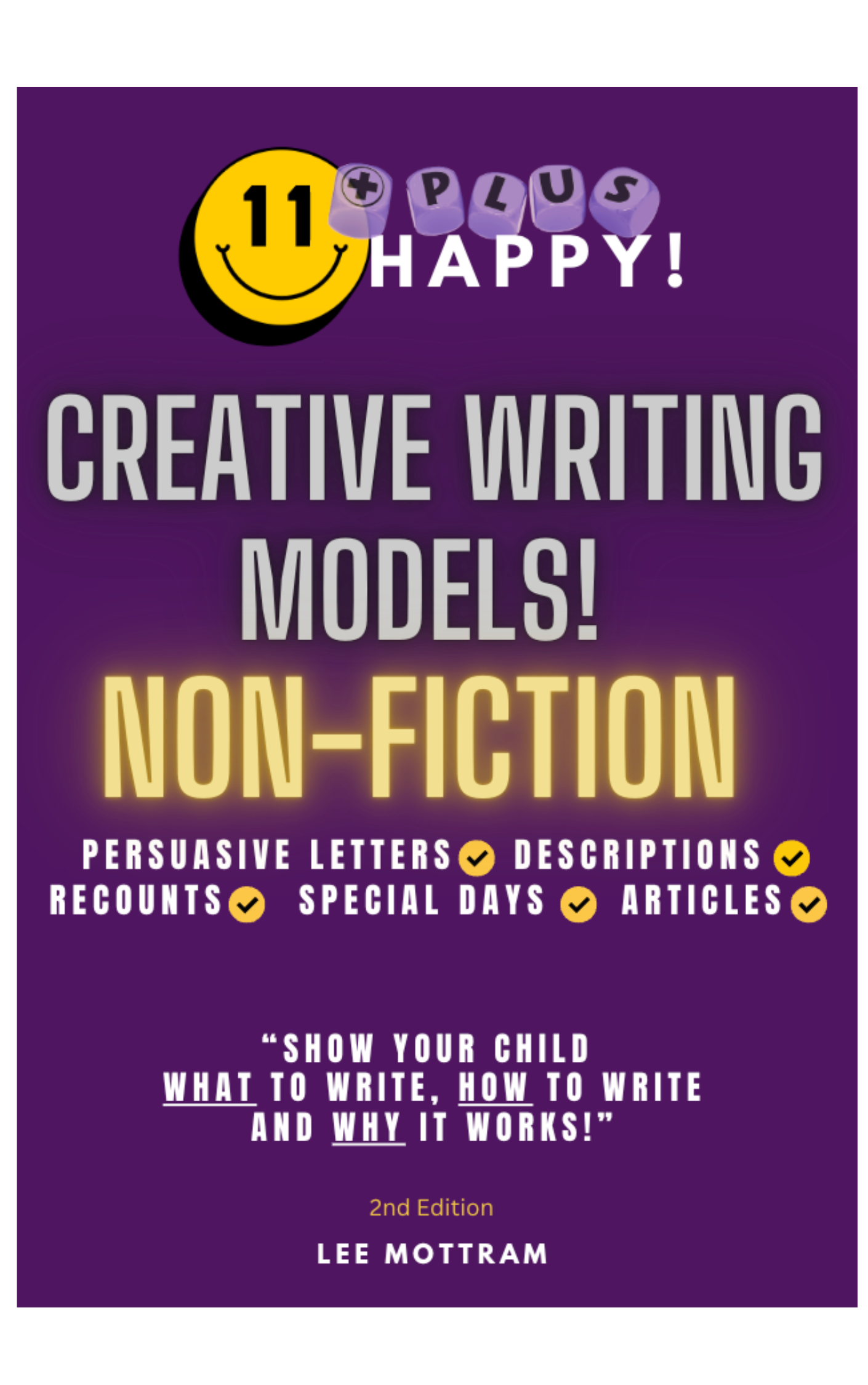
Amazing. You’ve now had a full sneak peak inside a full persuasive letter. Your child already has a model to build their own with. Go back and read the week’s blogs and put a plan together for their own writing. For many more models, lessons and dedicated vocabulary boosters, you’ll absolutely love the gloriously helpful book from which this extract is taken. You can dive in here

or by clicking on the happy pic!

An important reminder is that your child becomes a better writer through writing deliberately – selecting a few techniques and practising adding these into their writing. This stops them repeating the same ideas and staying at the same level of writing, and will ensure they make constant progress.

A second reminder – do lots of practice writing! 1-2 full essays a week is a great target that will allow them to build these skills over time.

A third reminder: praise their writing, love their writing. Point out improvements with enthusiasm, note any gaps quietly, and add these into their next practice session.

Please let me know what you enjoyed and learned from our time together in this Sneak Peak Week.

Get in touch at leemottram@11plushappy.com

Have a beautiful day of learning.

Lee, London

Sneak Peak Week Day 3: Step Inside My Non-Fiction Creative Writing Book (Half-term Happy Catch up!)

Hello! All this week, Monday-Friday, I’m reposting fantastically helpful extracts from an eleven-plus exam-winning model of a persuasive letter, taken from my sensational book of non-fiction creative writing models. The aim? Let’s improve your child’s writing THIS WEEK!

Welcome to Wednesday.

On Monday, we looked at the opening of the letter and the question prompt. On Tuesday, we continued with the first three paragraphs of the letter. Today, we continue reading the letter and deep-diving into the lesson that accompanies the model in the book. The post is laid out in the following way:

  • The next 2 paragraphs of the letter.
  • Extracts from the What, How, Why lesson that will guide you and your child through the writing features used in the model. You’ll be able to SHOW your child or student what successful writing looks like. (Each model in the book is always partnered with pages and pages of this in-deep learning, so you can squeeze maximum learning value from each model.)
  • To help with the lesson, I split up the original letter into pieces. These sentences from the original letter are in bold to help you see what writing the lesson is referring to.
  • VVV: Each essay showcases Very Varied Vocabulary that your child can use in their own work. In the book, each word also comes with a definition to help your child understand and use the word swiftly in their own work. You’ll see VVV that relates to the extract we’re zooming in on.

HAPPY TIP! I want you to focus on the fact today’s paragraphs are more-of-less paragraphs. Larger paragraphs approximately 5-7 sentences long, which explore one main theme each, and which we build with adding more and more related information on this theme. More-of-less paragraphs help your child build their word count, add vocabulary and punctuation, and create a piece of writing that really sticks together. If you take one message from today, it’s to guide and encourage and celebrate your child to write these more-of-less paragraphs.

Okay, let’s go…

Extract continued

Not only does this go against your own advertised commitment to children’s health (I quote the leaflet given out in all schools: ‘Fighting for Fitness, Fighting for Families – Welcome to the 6Fs’), but it also stores up massive health problems for these children as they transition into unhealthy adults. Walking in fresh air for 40 minutes daily is the bare minimum needed to maintain health. Your proposal takes away both the fresh air and the place to walk. Did you know that over 200 years ago, a government minister (someone like you) recognised that parks were the ‘lungs of London’? Lungs are vital to life, yet you plan to remove those lungs. You have no right to perform such a drastic operation.

Leading on from this, the third reason for you to ‘refuse’ the refuse is financial. This, perhaps, is the most important to you. Please be assured I’m not against the council. I love this area and am grateful for the work you do. Yes, I understand you need to create £2,000,000 of savings over the next few years. Unfortunately, you are not seeing the wood for the (soon to be cut down) trees. The unhealthy adults we mentioned above are going to bring a huge burden on another important council service, the NHS. You may save a million only to spend a billion. What kind of planning is this?

WHAT, HOW AND WHY

Not only

  • A paired conjunction shows sentence variation (see below for the other half).

does this go against your own advertised commitment to children’s health, (I quote, ‘Fighting for Families, Fighting for Fitness – Welcome to the 6Fs’)

  • I invent a slogan (a catchy, memorable phrase for a product or service) combining alliteration and capital letters. This shows I know what a slogan is (they are often taught in KS2 English). If you can invent a quick creative idea like this, it gives you another point to argue against or for, which will help you write more words!

but it also (the other half of the paired conjunction) stores up massive health problems for these children as they transition into unhealthy adults.

  • A paired conjunction – Not only…but also – will stand out, as these are rarely used by KS2 writers. (See Chapter 13 in Book 1, Teach Your Little Genius to Pass 11plus Creative Writing Exams, to learn about paired conjunctions.)
  • VVV: transition.

Walking in fresh air for 40 minutes daily is the bare minimum needed to maintain health. Your proposal takes away both the fresh air and the place to walk. Did you know that over 200 years ago, a government minister (someone like you) pointed out that parks were the ‘lungs of London’? Lungs are vital to life, yet you plan to remove those lungs. You have no right to perform such a drastic operation.

  • Lungs of London: This is a true historical quote, so please use it in your own writing.
  • Facts and figures support your argument, as they feel like evidence, not opinion.
  • I use facts and figures to prove parks have always been an important part of London life.
  • Brackets help my punctuation sprinkle. The information inside connects today’s council  responsibilities to old decisions, to persuade the council to behave as responsibly as the historical council. I pretend my argument is not mine, but history’s. It’s another form of social proof.
  • Blender: Alliteration combines with metaphor in ‘lungs of London’. A metaphor helps the reader understand the argument in a different way by giving them an image they can easily imagine. I want to wake up the empathy of the council by reminding them their decision should be about people, not money.
  • VVV: proposal, drastic.

Leading on from this,

  • A sentence starter that does two clever jobs. ‘This’ points back to the last point and paragraph, while ‘Leading on’ moves the argument forward to the next point. 

 the third reason to ‘refuse’ the refuse is financial.

  • A pun on ‘refuse’ as a verb – meaning to reject, as well as a noun – the actual rubbish itself. I show the marker I understand and can use homographs – words written the same, but often pronounced differently:

In ‘refuse’ as a noun, I stress the first syllable: refuse.

The verb (I refuse to do that) stresses the second syllable: refuse.

This, perhaps,

  • ‘Perhaps’ is conditional language, which makes this point a polite suggestion, rather than a forceful opinion. It also makes me appear as if I’m thinking about the issue as much as I want the reader to. Try using perhaps, possibly, could or might in part of your persuasive argument.

is the most beneficial to you.

  • Explaining why your argument helps the reader can be very persuasive.

Please be assured, I’m not against the council – I love this area and am grateful for the work you do.

  • Let the other person know you are on the same side, not attacking them. It can work wonders!
  • A single dash sentence makes the second point very clear. 
  • VVV: assured.

 Yes, I understand you need to create £2,000,000 of savings.

  • Again, I agree with the other person’s position. Do this and you take some of your opponent’s need to disagree with you away. The person may think, Oh, they agree with me, they must be reasonable and intelligent, so maybe I should try and agree with them too.
  • Another statistic makes my essay sound believable.

Unfortunately, you are not seeing the wood for the (soon to be cut down) trees.

  • Negative connective: ‘Unfortunately’ highlights they are, in fact, wrong.
  • Immediately after agreeing with their position, I suggest it’s wrong. I’ve caught them off guard!
  • I use the idiom ‘wood for the trees’ to show the examiner I know and understand idioms. It means not being able to see the big picture because you are focusing on a small detail. It helps that my idiom is about trees, as the whole argument is about saving nature.
  • I squeeze in a pun by adding to the idiom with a punctuation-powered extra phrase that relates to my letter: (soon to be cut down). I would hope my marker finds this playful, advanced, writing. I’m a writer enjoying myself writing!

The unhealthy adults we mentioned above are going to bring a huge burden on the NHS – you may save a million only to spend a billion.

  • Contrast: Using similar-sounding phrases (save a million…spend a billion.) with very different numbers and verbs exaggerates the silliness of closing the park because of the very large financial consequence.
  • Single dash: This acts like a spotlight focusing on the contrasting phrases that follow, giving them extra persuasive power. Single dashes add to your advanced punctuation sprinkle and allow you to vary your sentences.
  • Different sentences are more interesting to read and help the whole passage flow. How many different sentence types or sentence lengths can you find in my letter? How many different types of sentence will you use in your next persuasive letter?
  • VVV: burden.

What kind of planning is this?

  • A rhetorical question involves the reader directly again. I don’t blame, I focus carefully on the planning itself, not the planner. Obviously, I am secretly blaming the planner. I’m definitely threatening that if they carry on, they will be to blame for choosing to be part of a ridiculous plan.

The end of Day 3 is the start of your Happy! How did this extract help you make a breakthrough in helping your child’s writing to grow and improve with a spirit of play and investigation? Does it show you the blisteringly unbelievable power of more-of less paragraphs? How can you add a part of this learning to the next session with your child? Encourage your child to try on sentences and techniques the way they would try on dressing-up clothes or try new skills at a sport. (Psst…Choose a metaphor that matches your child’s interests to help it stick!)

A reminder, here’s the gloriously helpful book this extract comes from. Please do dive in here

or click on the happy pic!

You can also visit the books and downloads page at www.11plushappy.com to see this and other good stuff to help your child pass with a smile.

Please do join me tomorrow (Thursday) for Day 4 of Sneak Peak Week. Thank you for reading, I truly hope it helps ignite your child’s writing in a very practical, happy way.

Please let me know any thoughts, or if something has helped you at leemottram@11plushappy.com.

Have a beautiful day of learning.

Lee, London

Sneak Peak Week Day 2: Step Inside My Non-Fiction Creative Writing Book (Half-term Happy Catch up!)

Hello! All this week, Monday-Friday, I’m reposting fantastically extracts of an eleven-plus exam-winning model of a persuasive letter, taken from my sensational book of non-fiction creative writing models. One aim – to improve your child’s writing THIS WEEK..

Yesterday, we looked at the opening of the letter and the question prompt.

Today, we’ll explore in fully majestic learning depth the next two paragraphs. We’ll follow a similar path to yesterday:

  • The next 2 paragraphs of the letter.
  • Extracts from the What, How, Why lesson that will guide you and your child through the writing features used in the model. You’ll be able to SHOW your child or student what successful writing looks like. (Each model in the book is always partnered with pages and pages of this in-deep learning, so you can squeeze maximum learning value from each model.)
  • The sentences from the original letter are in bold to help you see what writing the lesson is referring to.
  • VVV: Each essay showcases Very Varied Vocabulary that your child can use in their own work. In the book, each word also comes with a definition to help your child understand and use the word swiftly in their own work.

Time to learn!

Extract continued

How many of these children do you think use the park at some point in their week?

Even the most conservative estimate must be over half. Indeed, 23 sports clubs currently use the fields (statistics again taken from your website, Sports Provision page), along with hundreds of mums, dads and grandparents, all keeping themselves and these thousands of children happy and healthy. Imagine these clubs, these family exercise sessions, wiped out overnight.

This brings me to reason No.2: what comes in place of our healthy, connected community? The disease-bringing stench of burning fumes; the rotting of rubbish and badly-designed, unrecyclable materials that children like me had no say in making. The centre will be a monster unleashed by one generation on another – a clumsy, grown-up footprint stamping on the future of youth. To be clear, a devastating, direct consequence of the refuse centre will be that you send 4000 children indoors to be addicts of T.V. screens, addicts of computer screens, addicts of smartphone screens; you will be creating a community of tablet junkies.

WHAT, HOW AND WHY

How many of these children do you think use the park at some point in their week?

  • A one-sentence paragraph and a question combined. I give the question space so that the reader can pause and think about it. Add a couple of one-sentence paragraphs to your writing to highlight important information – it will impress. It shows you can control the structure of your writing.
  • I pivot the argument away from the playing fields to the more emotional subject of children, to make the reader feel my argument. This is not about the park, it’s really about children.

Even the most conservative estimate must be over half this number. Indeed, twenty-three sports clubs currently use the fields (statistics again taken from your website, on the Sports Provision page), along with hundreds of mums, dads and grandparents,

  • Indeed: An emphasising connective for variety and persuasion.
  • Brackets for my punctuation sprinkle. I can tuck this info in brackets since in the opening of the letter, I had already mentioned the council’s website.
  • Power of 3: ‘Mums, dads and grandparents’ feels larger and more personal than ‘people’.
  • VVV: conservative, currently.

all keeping themselves and these thousands of children happy and healthy. Imagine these clubs, these family exercise sessions, wiped out overnight.

  • Contrast: A short sentence with a bossy verb (imagine) after the long previous sentence focuses on the sudden end to the activity of the clubs and families. Contrast is placing two different qualities or images next to each other. Each makes the other stand out.

This brings me to reason number two: what comes in place of our healthy, connected community?

  • A formal linking sentence moves the argument to a new focus.
  • Alliteration emphasises how the park keeps the community together.
  • A direct question to the reader to involve them and hold their attention.

The disease-bringing

  • A compound adjective made from joining a noun to the front of an adjective with a hyphen. Designing your own compound adjectives shows a great control of language and gives you a chance to come up with something original.
  • The hyphen helps my punctuation sprinkle.

stench of burning fumes; the rotting of rubbish and badly-designed unrecyclable materials that we children had no say in making.

  • Emotional imagery: Children are suffering because of adults. I hint that the planner I am writing to is one of these harming adults if they close the park.
  • Alliteration: ‘Rotting of rubbish’ accentuates the unhealthiness.
  • A semicolon shows the reader the two sentences either side have a strong relationship. Here, I use it to replace the conjunction ‘and’. The information on each side teams up with the other and increases the overall power of the sentence.
  • VVV: stench, fumes.

The centre will be a monster unleashed by one generation on another

  • Metaphor, exaggeration and a dash before a conclusion – blending writing features in a sentence is such a lovely way to treat your reader and dazzle your marker.

a clumsy, grown-up footprint stamping on the future of youth.

  • Extended metaphor: The monster is now clumsy and stamping on things.

To be clear, (a link connective to keep the argument flowing and connected) a devastating, direct (exaggeration and alliteration) consequence of the refuse centre will be that you send four thousand children indoors to be addicts of T.V. screens, addicts of computer screens, addicts of smartphone screens – you will be creating a community of tablet junkies.

  • More exaggeration to emphasise the negative impact of the decision.
  • Repetition of the same “addicts…” as a sentence starter is memorably persuasive and powerful. The repetition makes it seem really serious and really true.
  • Pun: We know a ‘tablet’ is an electronic device, but it is also another name for a pill, so I add to the sad, emotional idea of an addict.
  • A single dash creates a dramatic pause and introduces an equally dramatic conclusion. It helps your punctuation sprinkle – you want a sprinkle of all punctuation.
  • VVV: devastating, unleashed.

Day 2 is done…Now, go and have some writing fun! What did you learn from today’s extract and lesson? What will you show your child in your next session? Encourage your young writer to play with these features in their next practice-write. A spirit of fun and adventure. Investigate like a scientist. Please bear in mind that you don’t have to include everything at once. You might focus on the punctuation, or perhaps the extended metaphor, then fold the next feature into the next essay, while keeping the feature/s that your child learned previously. Slowly, you can fold in all the features into a delicious cake mix…and then bake that writing!

A reminder, here’s the gloriously helpful book this extract comes from. Please do dive in here

or click on the happy pic!

You can also visit the books and downloads page at www.11plushappy.com to see this and other good stuff to help your child pass with a smile.

Please do join me tomorrow (Wednesday) for Day 3 of Sneak Peak Week. Thank you for reading, I truly hope it helps ignite your child’s writing in a very practical way.

Please let me know any thoughts, or if something has helped you at leemottram@11plushappy.com.

Have a beautiful day of learning.

Lee, London