Words of the week that your child can add to their writing (taken from a new upcoming book release)

Good morning, winter parents, tutors and children! I wanted to share a set of words from a story I’ve just finished writing, which will be included in an upcoming 11plushappy! book of fiction models. I thought, why wait till the book is out? They might help you now.

Each story model I’m putting in the book comes with a VVV – Very Varied Vocabulary – section, with ambitious vocabulary used in the story, along with meanings as they’re used in the story.

Vocabulary development is a vital tool for eleven plus writing – rare or advanced words, especially if they’ve been revised and the spelling is correct, will stand out from the crowd. Beyond the 11 plus, vocabulary is a superpower to help reading, writing and speaking. As Dr Seuss remarked, “The more that you read, the more things you will know. The more that you learn, the more places you’ll go.”

Remember that some of the words below can have more than one meaning. Indeed, they can also be different types of words. Venture, for example, is a verb for doing something or going somewhere that has risks, but it’s also a noun, the name of a particular venture. (Did you see I added an adjective before the noun to describe it?)

So use these words and meanings below as a springboard. The meanings I give are how I’ve used them in my story, and this can be a very quick hack to getting your child to use them quickly. Do have fun digging deep into all that a word can be alongside this.

Words you can use and what they mean in the story

Volume (noun): How loud something is. (I am talking about flooding river water, so it’s also a pun on another meaning of liquid volume or capacity, which means how much liquid is in the river.)

Pummelling (verb): Hitting something or someone many times, often with fists.

Affrighted (adjective): Very scared or frightened.

Instructed (verb): Told someone how to do something; gave directions.

Principal (adjective): Most important.

Thus (adverb): In this way; as a result, therefore we can say that. A fantastic sentence starter!

Venture (verb): To go somewhere or do something that might be risky.

Wretchedly (adverb): In a very unhappy, miserable way.

Reciprocated (verb): Responded to something in the same way (like returning a smile or kindness).

All-consuming (adjective): Taking up all your attention, energy, or feelings.

Seized (verb): Grabbed something quickly and firmly.

Impulse (noun): A sudden desire to do something without thinking.

Subdued (adjective): Quiet, gentle, or not as strong as usual.

Distressed (adjective): Very upset, worried, or in trouble.

Clacking (noun): A sharp, clicking sound, the sound of knocking stones together.

Inevitable (adjective): Something that is sure to happen and can’t be avoided.

Anguish (noun): Very strong pain or sadness.

Anticipate (verb): To expect something to happen; to look forward to something.

Flood-borne (adjective): Carried or brought by floodwaters.

Prodigious (adjective): Very large, amazing, or impressive.

Silhouette (noun): A dark outline or shape of something seen against a lighter background.

Mercifully (adverb): Thankfully; in a way that brings relief or kindness.

Presently (adverb): Soon; in a short time.

Occurred (verb): Happened; took place.

Clamber (verb): To climb awkwardly using hands and feet.

Makeshift (adjective): Temporary and not perfect, but good enough for now.

What wonderful words. I hope your child will be able to put some or all of these into their writing this week. If your child does add them in a story, I’d love to read it, so please do email it in at leemottram@11plushappy.com.

Right, back to writing the book! Have a wonderful winter day of learning. If you’re considering tuition as the season of winter fire glow, crisp dark nights, Christmas lights and mulled wine begins, do get in touch at leemottram@11plushappy.com. Giving the gift of education could be the most rewarding gift of all. If you’d like to treat a relative – a son, daughter, niece or nephew to a lesson or two, please do let me know, gift certificates are available. And do please visit www.11plushappy.com for paperback books to help your child’s learning.

Have a wonderful winter week of wonder and words.

Lee, London
Creative Writing Happy Tip: Subscribe to this blog!

Boo! A very short hello as you prepare for 11plus pr…oh, no , sorry, I mean Halloween today. If you’re serious about your child being the best prepared they can be for their creative writing exam, it’s wise to dip into different sources and formats of tests, as well as alternative advice and how-to’s. You gain the widest net of knowledge and perspective. That goes for resources too. There are books on my website that are dedicated to 11plus creative writing, that will give you a fresh, expert (I tutor 6 days a week) approach to transforming or enhancing your child’s writing.

There’s also this blog, where I post daily thoughts and strategies to improve your child’s writing, along with other aspects of the 11plus English exam. Think of it as the networking equivalent of an after school or before school parent teacher meeting, with insider advice you can put into practice as fast as a firework, and much faster than carving a pumpkin. So please, do subscribe, whether you’re a parent, grandparent, fellow tutor or teacher, or anyone helping children learn, and let me help you along the wonderful road that is the 11plus.

11plus Happy Halloween!

Lee, London.

Now With Pictures! (I Love Writing)

On Monday, I shared my love of both teaching and writing creative writing, and offered you a tip to help your child combine photographs from a day out into an exciting story. I now add to this three super happy, super important gifts: the photographs!

As I near completion of the 11plus Creative Writing Fiction Models guide, book 3 in the Creative Writing Series, I’ve just finished a story about cakes, and am, this morning, halfway through my last story, a story about two very different trees and a villain called Lord Hardsilver, inspired by a visit to the incredible Port Meirion, a creative writing paradise!

How did I come up with the idea for this latest story? I took countless photos on the day, chose three, and then stared at these three pictures below and imagined a way to connect them.

Aren’t they spectacular? All from one place!

Your child can do the same with photos chosen from a day out anywhere. After choosing three pictures, encourage your child to plan a possible story that links the photos, with between 3-6 steps. HAPPY TIP: Your young writer could even repeat this and come up with several plans for different stories from the same photos, which is a fantastic planning exercise to build planning muscle! To help you see what I mean, here’s one of the rough plans I came up with for the fantastic photos above:

  1. Lord Hardsilver has persuaded/bullied the old secretive lady to sell him land on a remote peninsula.
  2. Ancient forest, a giver to nature – a spirit lives to tend it.
  3. He wants the rare wood, and to build a village on it to trap people to work for him.
  4. As he works, the tree screams. The men are frightened.
  5. He ignores them, sacks any who rebel and brings in more desperate people.
  6. The spirit through the tree threatens he will be made part of the land, but he laughs and starts to chop at the tree.
  7. All the trees scream, deafening and hurting, vines begin grabbing, soil swallows workers. Some run for the boat, but it has fused with the island – no escape.
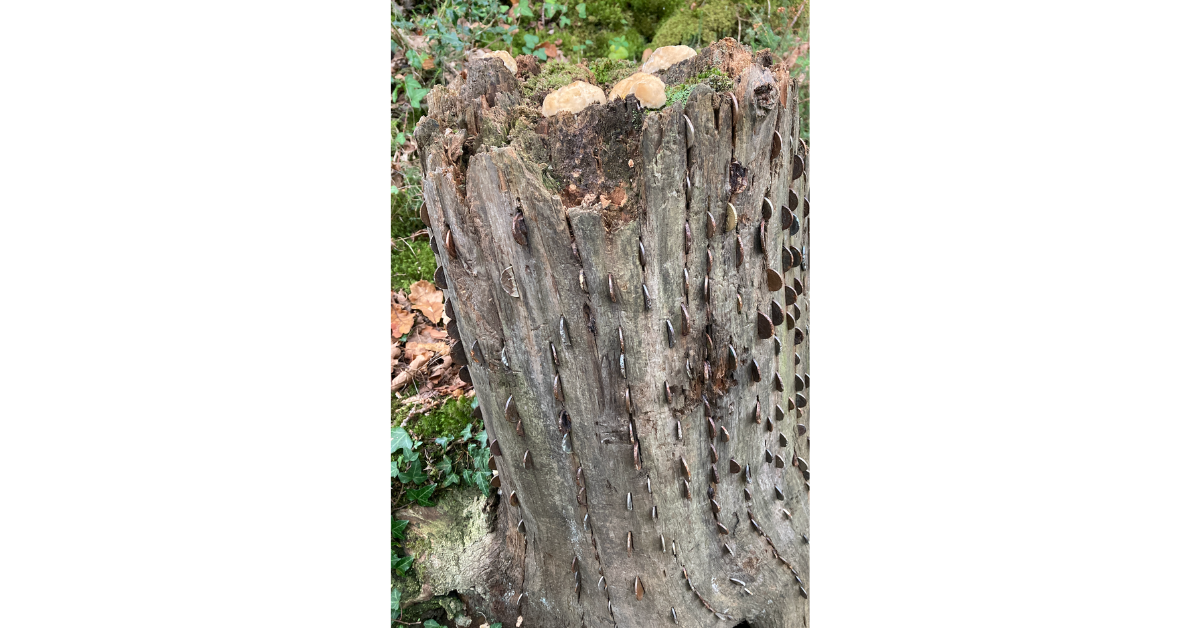
  8. Lord Hardsilver is turned into a tree stump. Animals come and slide coins into him so he can feel the pain of money that he caused nature.

Feel free to use this as a plan for your child’s writing. In any case, the story your child writes for their photos will likely have a structure and connection, since the pictures you took were from the same area, as you can see in the pictures above.

Why does this power of three work? As we spoke about on Monday: “the act of linking the pictures possibly takes advantage of the fact we humans are very good at finding patterns or associations between given objects – even when there is no real link. For example, if I ask you to imagine a story or create a link that could connect a tortoise and a paperclip, your brain will probably do it (perhaps the tortoise is a jewel thief who uses the paperclip to pick locks from a Lego house, keeping the treasure under her shell), whereas, if I had asked you to think of associations that connect only to a tortoise, it’s unlikely your brain would have thought about a paperclip!”

Okay, today is ‘finish story’ day. I really hope you enjoyed the photographs. Port Meirion was a life-changing creative writing experience for me. I came back with a whole book of story ideas.

In the meantime, if you think your child would enjoy or benefit from creative writing lessons from a teacher who absolutely loves writing, please do reach out to me. With the 11plus exams nearly over for this year, I’ll be taking on five online students. I’m currently teaching Y4, Y5, Y8, Y10 and Y11 students, preparing for both the 11plus and GCSE English Language exams, from Halifax to London to Kent. Please email leemottram@11plushappy.com.

Happy Writing!

Lee, London.

VVV: Very Varied Vocabulary Episode 2: 7 Tips to Help Your Child Grow and Embed a Gargantuan 11Plus Vocabulary! (Preview from the coming podcast season)

Hello! We’re back with Podcast Preview 2, in a season dedicated to the 11plus superhero skill of vocabulary. In our last podcast, we learned why it was vital your child develops a sparkling repertoire of words as they approach the 11plus. Today, I’d like to share 7 ways to kickstart and augment your child’s 11plus vocabulary in your learning sessions and in life around the house. Maybe you’re doing them already – if you are, please let me know how they work for you. Here goes…

  1. Down-Up & Write (with a drop of the unusual added in).

When reading new words in stories, plan times – perhaps chapter ends, or every few pages – for you or your child to write the word down and look up its meaning. Then take a handful of words and write them into a small paragraph, or a few sentences in ANY kind of text: a silly poem, a shopping list, a letter or email to a relative, a name tag on a plant, a story, a description whatever you can both think of. Sometimes, unusual texts will stick in the mind. Imagine you’ve written adjectives on separate plant pots in your garden or kitchen; they’re there all the time, so your child will be reminded of them if they’re playing near them or watering them. You can gamify this quite easily. “Mahesh, go and water the omniscient onions.” “Ananya, could you water the Vociferous Violets, please?”

2. Make time to read aloud to each other.

It’s a super way to really identify words that are tricky or new, since if they’re reading alone, you won’t hear your child pause or skip. The danger is, if there’s too many skips without taking the time to understand or share a word and its meaning, it can become frustrating, which can lead to avoiding reading (like the Wuthering Heights student I mentioned in the last post).

3. The Word List Board Game.

Look up word lists. You can google ‘vocabulary KS3/KS2’ or ‘ks2 synonyms for said, lists of verbs, etc. I love two resources out there: Banish Boring Words (it’s American, so just watch for ‘z’s when the UK uses ‘s’s, and the U.S. ‘or’ when the UK uses our (we write behaviour, they write behavior) and Twinkl have a fantastic ‘500 11plus words’ pdf if you are a member. (No affiliate, I just use them a lot in lessons, and I bought both the book and the subscription.) However, there are dozens of free lists out there. With a list, you have ready-made boardgame. Grab a dice (you need a dice as part of your 11plus journey – they turn everything into a game!) and roll through the words. You could go backwards, forwards, have a race to the centre of the list, with you starting at different ends, add any rule you can invent. With the word you land on, speak, check the meaning, and write it into a sentence. Even better, why not say all the words on your way to the word you land on?

Actually, on the issue of writing sentences, I’m coming to the conclusion that as we don’t ask children to write sentences in an exam, it might be better to choose 3-5 words at a time, which your child then puts into a paragraph. The extra advantage of this is it will strengthen the understanding of a word, since your child has to work out how the words can fit together.

4. A super solid strategy is to balance modern lists with lists of words from Victorian literature.

I’m in the process of developing Victorian lists, but if you google ‘victorian vocabulary list 11plus’ or ‘victorian vocabulary from novels’,you’ll be amazed at what you find. I’ll post when my lists are compiled.

5. Start, Middle and End.

To help your child write their paragraph, they could choose three words from a list and agree to use one word in the first sentence, one word in the middle and one in the last sentence. They can try this in a whole story, with one word the last word of the story, you have a fun target to aim for.

6. Choose 5-10 words of the week and make them the whole family’s target.

Points are given each time someone catches someone using the word in speech or in writing. Don’t be too serious with this, have some fun. “My need to burp is abating (lessening),” is absolutely fine! Go with your own family limits.

7. Synonym Bagels for see-through words.

This last one’s a teaser, as next week, we’ll look at the sinister, light-fingered, larcenous, vocabulary-thieving evil of see-through words, for which synonym bagels will come to your child’s rescue.

 For now, go have fun, go make some progress, find some new words together, do subscribe, and please pop by my little website, www.11plushappy.com, for books and posts to help you and your child achieve 11 plus success. You can also email me at leemottram@11plushappy.com . Thanks for being adventurous and brave and crazy and loving enough to walk this 11plus path with your child. I hope this first episode has whetted your appetite and got you salivating for some syllables. Sieze the moments, and enjoy the time you have learning together. Start learning, stay learning, stay 11plus happy!

Lee.

VVV: Very Varied Vocabulary: A Superhero of the 11 Plus. (Preview from the coming podcast season)

Hello! Good to speak to you again. Did you know you’ll soon be able to enjoy 11plushappy as a podcast? (Season 1 is curiously called season 2 – you’ll have to listen to find out why)

Season 2 will be dedicated to one of the major superheroes of happy 11plus learning – vocabulary. Over 10 episodes, you’ll understand why it’s such a life-changing, exam-winning champion, capable of transforming your child’s writing, reading, comprehension and SPAG-skills, both in the months of preparation and during your little genius’s exam itself. Vocabulary is a game changer, which will help your child make rapid gains in 11plus prep. In this blog, I’m giving you advance content script from the podcast, in order to get you started asap. Let’s ring the bell and dive into the lesson.

Episode 1 – Let’s talk words.

Why is vocabulary so important to your child’s 11plus chances? What’s the big/vast/abyss-like/substantial/momentous/consequential/mammoth/far-reaching deal?

Here are 4 reasons why teaching and practising challenging and exciting new words must be a priority in the learning you do with your child. You’ll see that they all mingle and affect each other, so the list of four is just to help us organise our thinking.

  1. It’s already a national priority

A first point to note is that nationally, vocabulary has already been declared a priority by the UK education sector.

For example, post Covid, The Department for Education, the national education body for state schools, guides reception teachers to ‘assess and address gaps in language’ and get busy with ‘extending’ vocabulary.’ For KS1 and 2, the talk is of ‘increasing vocabulary’ and ‘developing’ vocabulary. This was prompted by widespread worry from teachers and parents that post-lockdown children had less vocabulary skills than pre-lockdown, and that deliberate intervention ought to be a must-have.

Away from lockdown, other studies have also explored the important issue of a language gap between different socio-economic groups. One of these, by a team called Hart and Risley, suggested an almost unbelievable gap of 30 million words between the richest and poorest slices of society by the age of about 4, in terms of the words that children have been exposed to or use. The study has holes in it, so here’s a helpful link to a catch-up commentary on it from 2015, which I find sane.

What I love in the study is the beautiful idea of mental nutrition, key examples of which are vocabulary and parent-child talk.

What matters for us here is that if vocabulary is a priority of those in the know, then do you think it might be important for you and your child? Hopefully, your head’s nodding.

2. English as an Additional or Second Language?

Another reason you may wish to focus on teaching new words and exposing your child to a rich varied diet of words is if English is an additional or second language for your child. From a purely time factor, if you’re speaking a non-English language as a home language, your child will be less exposed to English words, and less exposed to sources of English words. Where I am in South London, for example, I teach several ridiculously talented Polish and Sri Lankan children, and we find it enormously helpful to include the learning and writing of new, ambitious vocabulary into most lessons. This boosts confidence, comprehension and eloquence in both speaking and creative writing. Your child can only write with the words they know, hence a continuous stream of new words into your child’s life is going to explode progress in English and supply wonderful, mental nutrition.

3. It makes your child a better writer

Your child will write more interesting words and produce better writing. Better writing leads to higher scores in tests. It just does. True, away from tests, published, highly respected authors often opt for simple language with complete success. For instance, some writers nearly always use ‘said’ for ‘she said’, and steer away from synonyms -whispered, breathed, bellowed, etc. But… these authors are not sitting for 11plus exams, where marks are given – I’ll repeat that – they ARE given – for ambitious, extensive vocabulary. Especially if it’s spelled right, which is another reason to teach it deliberately, to give your child time to learn how to write ambitious words without error.

4. It makes your child a better reader.

Reading improves your vocabulary and vocabulary improves your reading. I recently taught a KS3 English genius, who has an ambition to read the classics. She tragically confessed that she’d stopped reading Wuthering Heights at the first page because there had been too many words she hadn’t understood. Needless to say, we’re addressing that in lessons and she has picked up the book again!

Ultimately, it comes down to EXPOSURE. On radio, tv, and in unplanned conversation, we’re not going to come across the wide vocabulary we need to smash an 11plus entrance exam. We’re just not. Your child can’t learn a word if they don’t come across it, so you can really help by putting handfuls of high-quality words in front of them. Even a few new words each session will lead to huge gains across the months of prep, helping your child understand and recognise the wide range of words that tests can use, such as finding synonyms and antonyms, spelling uncommon words, recognising what part of speech (what kind of word) a word is, missing letters, and so on.

Okay, vocabulary. Over to you. Are you convinced? Persuaded? Cajoled? Influenced? Coaxed? Enticed? In our next blog, released on Tuesday, we’ll look at 7 easy exercises to help your child learn and use new words Maybe you’re doing some or all of them already…

The podcast, 11plushappy English, is due to launch early September, giving you another convenient way to enjoy tips and support as you take your child towards 11plus success.

Have a beautiful week of learning.

Lee, London

Quick…A sneak peak inside my Creative Writing Models Non-Fiction Guide!

With a new Non-Fiction Models book issued fresh for 2025, I’m dying to show you an extract from a persuasive letter, so you can see exactly how the guide will transform your child’s writing. Remember, each model in the book gives you:

  • A Question Prompt.
  • A short plan – the kind your child can actually put together in a couple of minutes.
  • The full model – Show your child what finished exam writing looks like to help them imagine it clearly. It’s like seeing a picture of a cake in a recipe book. Your child needs to know what they’re aiming for. Each model has all the must-write ingredients of exam-passing writing to super-boost your child’s mark.
  • A full, line by line or paragraph by paragraph lesson of every writing technique and structure point in the model, so your child can see what, how and why the writing works.
  • A vocabulary section with definitions of stretching, dazzling words for your child to use in their writing, to build eloquence and wow any marker!

It’s a guide to make your parent-and-child and tutor-and-child learning moments easy, valuable, and most importantly, to guarantee your child KNOWS how to make progress in every creative writing lesson and session. Yes, if you’d care to leap ahead in learning straight away, you can order your copy of the book on these links:

From Monday through to Friday, I’ll serialise extracts from the model and lessons – the full model and lesson taken from the book is 13 pages! We’re talking mountains of help and guidance!

My parents and children love this guide because it works: students progress quickly in all areas of exam-passing creative writing. Remember, I wrote the guide as a teaching tool, which use continually with my young writing legends – because it works. It’s your turn! Please come back to my 11plushappy.com blog on Monday. Here’s the sneak preview of what’s coming… Why not ask your child how many features they can spot in the opening paragraphs below?

Extract

Question: Your favourite playing fields are to be closed and replaced by a refuse (rubbish) and recycling centre to handle the town’s waste. Please write a letter to your local council to persuade them NOT to go ahead with this plan. You must give reasons for your viewpoint. What will you lose? You will be given marks for interesting vocabulary, persuasive writing techniques, punctuation and following the structure of a letter.

Time: 45 mins

(HAPPY TIP: Don’t be tricked into thinking you can write any letter you want. Although a question might not ask you to write a formal letter, persuasive letters should mostly use formal language.)

Freshly Cottage Flats

17 Goodview Court

Sutton

SM6 3PP

Dept of Planning

London Borough of Sutton                      20th September, 2026

Dear Sir/Madam

From the address above, you may be alerted to the fact I’m one of the many concerned, frightened and – to be frank – livid residents whose lives will be ruined by the proposed building of the Refuse and Recycling centre on the site of Goodview Playing Fields.

My name is Laney, and as an 11-year-old beginning her life in the area, I stand to be affected more adversely and for far longer than the misguided grown-ups who came up with this nightmarish idea. A refuse centre instead of a park? Thus, I write for an immediate end to this ‘rubbish’ idea. There are three clear reasons to maintain the fields, with both urgent and long-term implications: the high levels of use the park has; the serious harm to children’s health; and a shock reduction in your council’s finances.

First, grasp Goodview as it is. You will know, as the local planning team, that there are 15 – yes, 15 – primary schools in the area, along with 2 secondary schools. Statistics on your own website (truthful facts, we presume) confirm approximately 8000 children study at these schools (7,873 to be exact).

Let’s go! If you’d like to know what features are in here and why they work, please bookmark or add Monday 19th May to your calendar. I hope next week’s blog adds ease, smooth-tempers and happy learning to your week.

Oh, by the way, I’m deliriously excited about launching a podcast soon, to help you if you’re an on-the-go thinker and learner. I’ll share more details soon. Season 1 is almost finished recording!

Again, here are the book links, the digital bookshelves, if you want to dive in and make progress straight away.

Stay happy, stay learning.

Any questions? leemottram@11plushappy.com

Lee, London. May 25

Eleven plus Non-fiction Models offer a fast track to your child’s writing success.

Why models?

  • Because models work. Ever followed a how-to guide on YouTube? You’ve learned from modelling. It can be a very rapid way of achieving excellent results.
  • Because models are fair. As a teacher, I think it’s very unfair we ask children to write an excellent piece of non-fiction, unless they first see, read, learn and practise what ‘excellent’ looks like.

It’s all very well people telling you to write a great persuasive letter or recount or description, but what does that really mean? How much do you write? How do you start? How do you end? What techniques and structure should you include?

Children need to know what success looks like, so they can aim for it. Success leaves clues.  Lego toys come with pictures and instructions for a reason.

My promise in writing this brand new guide, 11 Plus Happy Creative Writing Models: Non-Fiction Edition is to maximise your child’s learning, to help them score the highest mark they possibly can. My vision is that anyone who reads, learns and follows the steps in this book will become some of the best writers in the room – perhaps the best writer in the room. With this in mind, I also promise that this guide is about MUCH MORE than the models.

Our shared commitment is we want your child to pass their 11 Plus creative writing with a very, very high mark. Our shared commitment is we’ll work and write a lot of deliberate practice writing along the way, using the tools in this guide. Our shared aim is to dazzle the marker with writing that stands out from the hundreds, perhaps thousands, of others. Our shared aim is that your children feel confident, equipped and ready to rock any exam. To make this a reality, each non-fiction model comes with the following:

  • A question prompt, so your young writer understands what each essay is trying to answer.
  • A model of a short plan – the kind you can actually write at the start of a time-pressured exam. Even the shortest plan will help you write the correct amount and make sure you stick to answering the question. You’d be surprised how often children write something completely different to what the question asks for. Or, they start by answering the question correctly, but then drift onto another topic or style of writing half way through.
  • The full model essay.
  • A huge and powerful lesson chapter: WHAT, HOW, WHY. We’ll zoom in to the micro-details, the many parts that make up a whole piece. The aim is clear: your child (that’s YOU if you’re the child!) will know what to write, how to write, and understand why they should write in this way.
  • VVV: A Very Varied Vocabulary section. Throughout the essays, we’ll collect dazzling and interesting words that I think you should use.
  • A list of the very varied vocabulary used in each piece of writing comes at the end of each chapter.
  • A definition for each word (as it’s used in the text) to help you write quickly with this jaw-dropping vocabulary.

This is the book I needed as a teacher. This is the book children deserve to read in order to help them see what finished exam-passing writing looks like, as well as understanding how that writing is put together. This is the book for the superhero parents who are actively involved in helping their child learn and prepare for 11plus success. This is a book that will support tutors in teaching creative writing.

But it’s not about the book; it’s about your child’s writing improving in each session. It’s about your child’s enjoyment and understanding of creative writing. It’s about your child feeling confident and skill-equipped to write a wide range of non-fiction essays.

Growing up, my mum and dad used to say often: “Children come first, second, third and last.” Before anything, consider the children. I know it’s why I became a teacher, I know it’s why I adored and continue to love being a dad. This book is part of that belief system.

Order your copy and let’s help your child reach their highest mark. Yes!

Eleven plus Non-fiction Models offer a fast track to your child’s writing success.

Why models?

  • Because models work. Ever followed a how-to guide on YouTube? You’ve learned from modelling. It can be a very rapid way of achieving excellent results.
  • Because models are fair. As a teacher, I think it’s very unfair we ask children to write an excellent piece of non-fiction, unless they first see, read, learn and practise what ‘excellent’ looks like.

It’s all very well people telling you to write a great persuasive letter or recount or description, but what does that really mean? How much do you write? How do you start? How do you end? What techniques and structure should you include?

Children need to know what success looks like, so they can aim for it. Success leaves clues.  Lego toys come with pictures and instructions for a reason.

My promise in writing this brand new guide, 11 Plus Happy Creative Writing Models: Non-Fiction Edition is to maximise your child’s learning, to help them score the highest mark they possibly can. My vision is that anyone who reads, learns and follows the steps in this book will become some of the best writers in the room – perhaps the best writer in the room. With this in mind, I also promise that this guide is about MUCH MORE than the models.

Our shared commitment is we want your child to pass their 11 Plus creative writing with a very, very high mark. Our shared commitment is we’ll work and write a lot of deliberate practice writing along the way, using the tools in this guide. Our shared aim is to dazzle the marker with writing that stands out from the hundreds, perhaps thousands, of others. Our shared aim is that your children feel confident, equipped and ready to rock any exam. To make this a reality, each non-fiction model comes with the following:

  • A question prompt, so your young writer understands what each essay is trying to answer.
  • A model of a short plan – the kind you can actually write at the start of a time-pressured exam. Even the shortest plan will help you write the correct amount and make sure you stick to answering the question. You’d be surprised how often children write something completely different to what the question asks for. Or, they start by answering the question correctly, but then drift onto another topic or style of writing half way through.
  • The full model essay.
  • A huge and powerful lesson chapter: WHAT, HOW, WHY. We’ll zoom in to the micro-details, the many parts that make up a whole piece. The aim is clear: your child (that’s YOU if you’re the child!) will know what to write, how to write, and understand why they should write in this way.
  • VVV: A Very Varied Vocabulary section. Throughout the essays, we’ll collect dazzling and interesting words that I think you should use.
  • A list of the very varied vocabulary used in each piece of writing comes at the end of each chapter.
  • A definition for each word (as it’s used in the text) to help you write quickly with this jaw-dropping vocabulary.

This is the book I needed as a teacher. This is the book children deserve to read in order to help them see what finished exam-passing writing looks like, as well as understanding how that writing is put together. This is the book for the superhero parents who are actively involved in helping their child learn and prepare for 11plus success. This is a book that will support tutors in teaching creative writing.

But it’s not about the book; it’s about your child’s writing improving in each session. It’s about your child’s enjoyment and understanding of creative writing. It’s about your child feeling confident and skill-equipped to write a wide range of non-fiction essays.

Growing up, my mum and dad used to say often: “Children come first, second, third and last.” Before anything, consider the children. I know it’s why I became a teacher, I know it’s why I adored and continue to love being a dad. This book is part of that belief system.

Order your copy and let’s help your child reach their highest mark. Yes!

New for You! 15 top-level non-fiction models to help your child be the best writer in the exam room

A year in the writing, informed by hundreds of hours of teaching, and already helping people win success in dozens of 11plus entrance exams, please may I introduce an absolute must-have for your book-shelf or digital library in 2025:

In digital:

11 Plus Happy Creative Writing Models! Non-Fiction Edition: Instant Ebook Download

11 Plus Happy Creative Writing Models! Non-Fiction Edition: Instant Ebook Download

£25.00

For Parents, Children and Tutors. 11plus just got happier!  15 top-level models of the most common non-fiction exam questions. Matches exam time and word count. Expert lessons for every feature in every essay, with pages and pages of rich explanations, so that your child can emulate and own each skill.  From plan to punctuation to … Continue reading 11 Plus Happy Creative Writing Models! Non-Fiction Edition: Instant Ebook Download →

In paperback from Amazon:

Celebrate what they don’t know…

One highly effective and relaxing teaching and learning method you should use with your child is to high five them when a test shows they don’t know something.

Let me explain.

They sit a Maths paper and it shows they don’t know co-ordinates, or have forgotten how to do long division, or they come across a topic they haven’t covered yet. This is absolutely brilliant. Why? Because you have both just identified the next thing they’re going to be brilliant at. When you know you don’t know, you can then sit with them for a session or two dedicated to this unknown area.

Do this enough times and you come close to running out of things you don’t know in time for any real test.

If you’re critical of something they don’t know, they may be less likely to want to learn it, in case they get it wrong and disappoint you again. But if you frame learning as an adventure to actively seek out the unknowns and see it as finding treasure, it becomes less worrying and you make faster progress. Faster progress is what we want!

So celebrate what your child doesn’t know. You’ve found the valuable next step on their learning path. Yey!

Enjoy your back to school moment. Give them extra hugs and handshakes, it doesn’t last forever. Here’s to the preciousness of education and the preciousness of another chance to start again and move forward.

Best, Lee