
Why models?
- Because models work. Ever followed a how-to guide on YouTube? You’ve learned from modelling. It can be a very rapid way of achieving excellent results.
- Because models are fair. As a teacher, I think it’s very unfair we ask children to write an excellent piece of non-fiction, unless they first see, read, learn and practise what ‘excellent’ looks like.
It’s all very well people telling you to write a great persuasive letter or recount or description, but what does that really mean? How much do you write? How do you start? How do you end? What techniques and structure should you include?
Children need to know what success looks like, so they can aim for it. Success leaves clues. Lego toys come with pictures and instructions for a reason.
My promise in writing this brand new guide, 11 Plus Happy Creative Writing Models: Non-Fiction Edition is to maximise your child’s learning, to help them score the highest mark they possibly can. My vision is that anyone who reads, learns and follows the steps in this book will become some of the best writers in the room – perhaps the best writer in the room. With this in mind, I also promise that this guide is about MUCH MORE than the models.
Our shared commitment is we want your child to pass their 11 Plus creative writing with a very, very high mark. Our shared commitment is we’ll work and write a lot of deliberate practice writing along the way, using the tools in this guide. Our shared aim is to dazzle the marker with writing that stands out from the hundreds, perhaps thousands, of others. Our shared aim is that your children feel confident, equipped and ready to rock any exam. To make this a reality, each non-fiction model comes with the following:
- A question prompt, so your young writer understands what each essay is trying to answer.
- A model of a short plan – the kind you can actually write at the start of a time-pressured exam. Even the shortest plan will help you write the correct amount and make sure you stick to answering the question. You’d be surprised how often children write something completely different to what the question asks for. Or, they start by answering the question correctly, but then drift onto another topic or style of writing half way through.
- The full model essay.
- A huge and powerful lesson chapter: WHAT, HOW, WHY. We’ll zoom in to the micro-details, the many parts that make up a whole piece. The aim is clear: your child (that’s YOU if you’re the child!) will know what to write, how to write, and understand why they should write in this way.
- VVV: A Very Varied Vocabulary section. Throughout the essays, we’ll collect dazzling and interesting words that I think you should use.
- A list of the very varied vocabulary used in each piece of writing comes at the end of each chapter.
- A definition for each word (as it’s used in the text) to help you write quickly with this jaw-dropping vocabulary.
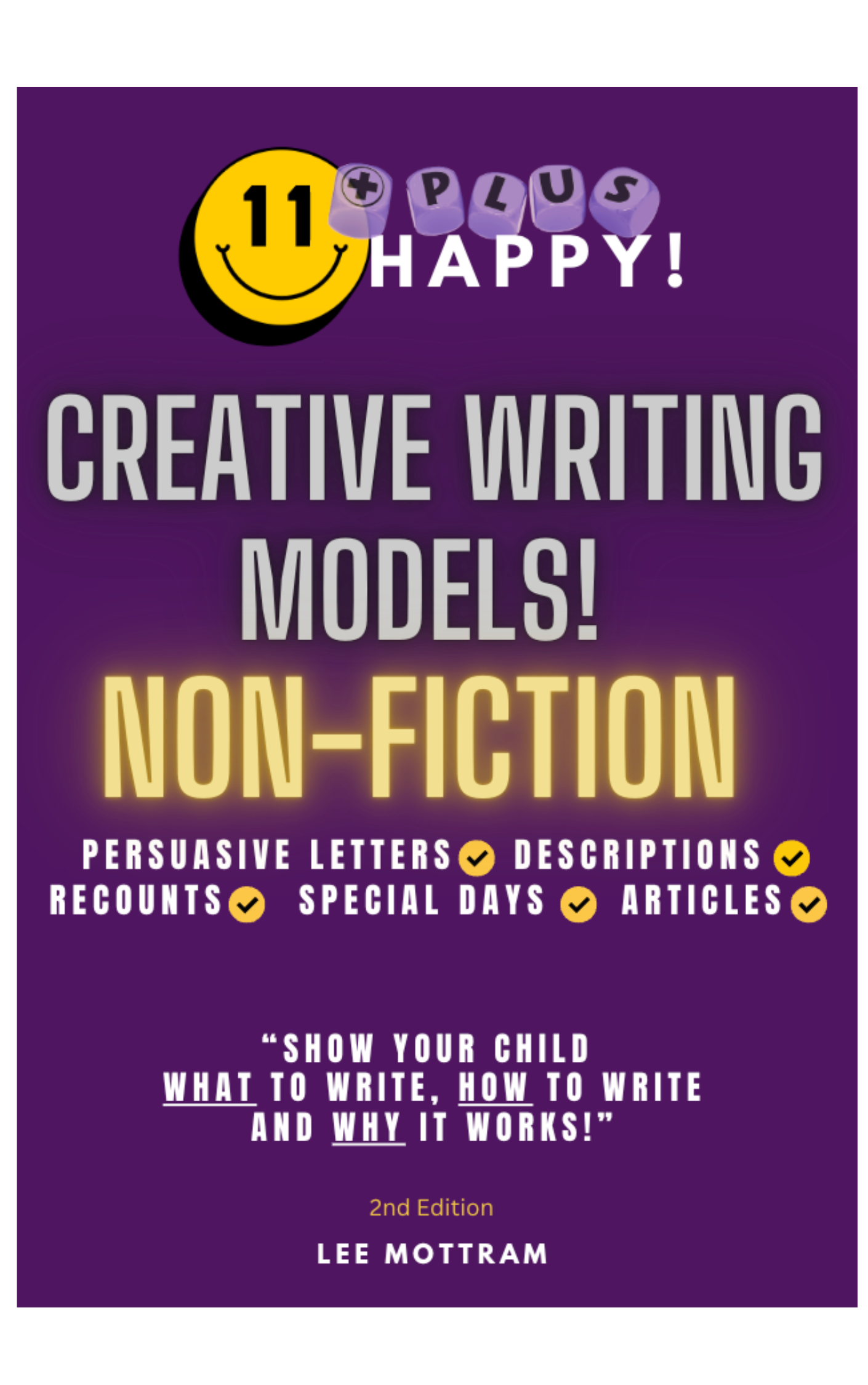
This is the book I needed as a teacher. This is the book children deserve to read in order to help them see what finished exam-passing writing looks like, as well as understanding how that writing is put together. This is the book for the superhero parents who are actively involved in helping their child learn and prepare for 11plus success. This is a book that will support tutors in teaching creative writing.
But it’s not about the book; it’s about your child’s writing improving in each session. It’s about your child’s enjoyment and understanding of creative writing. It’s about your child feeling confident and skill-equipped to write a wide range of non-fiction essays.
Growing up, my mum and dad used to say often: “Children come first, second, third and last.” Before anything, consider the children. I know it’s why I became a teacher, I know it’s why I adored and continue to love being a dad. This book is part of that belief system.
Order your copy and let’s help your child reach their highest mark. Yes!
